The Hidden Cost of Operational Inefficiency (And Why It Always Shows Up Late)
Posted by Felix Chau, SECA – Head of Operations
Most cost overruns don’t come from one big mistake.
They come from a thousand small ones.
- A delayed inspection.
- An unclear handover.
- A crew waiting on equipment.
- A report delivered too late to influence a decision.
Individually, these issues seem minor. Collectively, they are devastating.


Small Delays Compound Fast
Even small workflow inefficiencies compound exponentially in complex operations, particularly where multiple teams and assets intersect:
In infrastructure and maintenance environments, these inefficiencies result in:
- Lost productive hours
- Increased labour costs
- Rushed decision-making
- Higher failure rates
Handover Gaps: Where Accountability Gets Lost
Every handover is a risk point.
When inspection data, maintenance records, or asset condition insights are incomplete or inconsistent, decisions are delayed or made blindly.
This is where we see:
- Repeat work
- Conflicting priorities
- Budget overruns blamed on “unexpected issues”
In reality, the issue was visibility.


Resource Misalignment: Paying People to Wait
Nothing erodes margin faster than skilled resources waiting on:
- Equipment
- Access
- Information
Waiting is one of the most expensive and overlooked forms of waste in operational systems:
When operations are aligned tools, data, people, and planning this waste disappears.
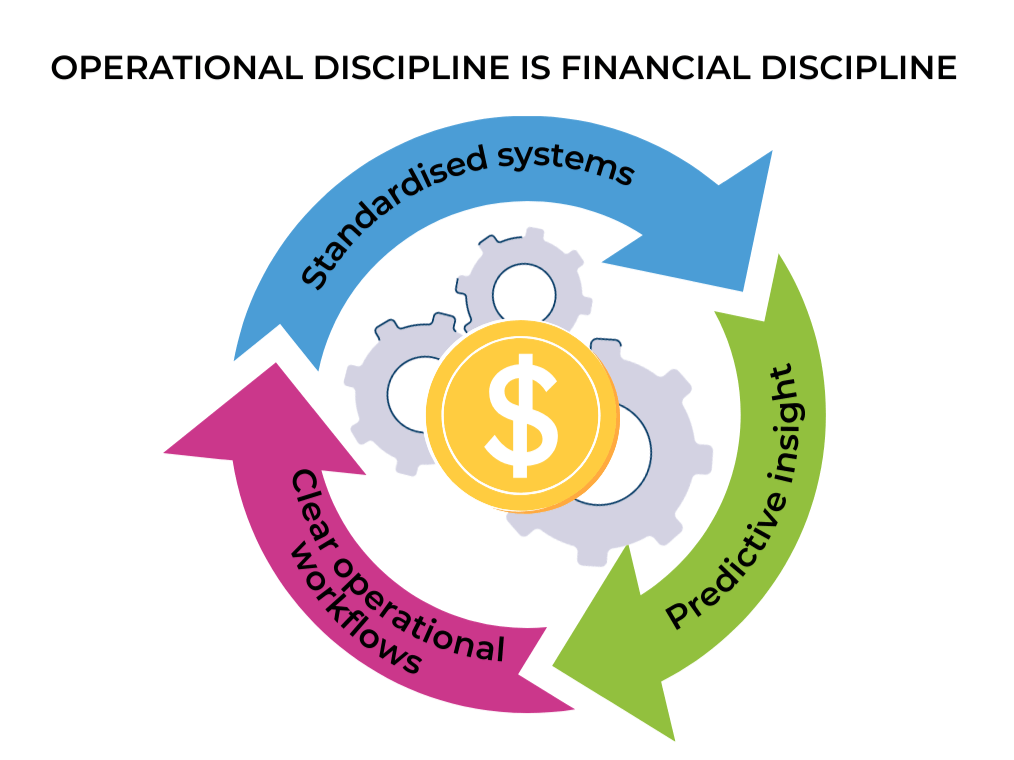
Operational Discipline Is Financial Discipline
The strongest operators don’t eliminate problems.
They eliminate friction.
At SECA, we consistently see that organisations who invest in:
- Standardised systems
- Predictive insight
- Clear operational workflows
…don’t just improve performance, they protect margin.
Operational efficiency isn’t about perfection. It’s about preventing small issues from becoming big costs.